

FACULTY

Research and Industry-Academia Collaboration
研究・産学連携
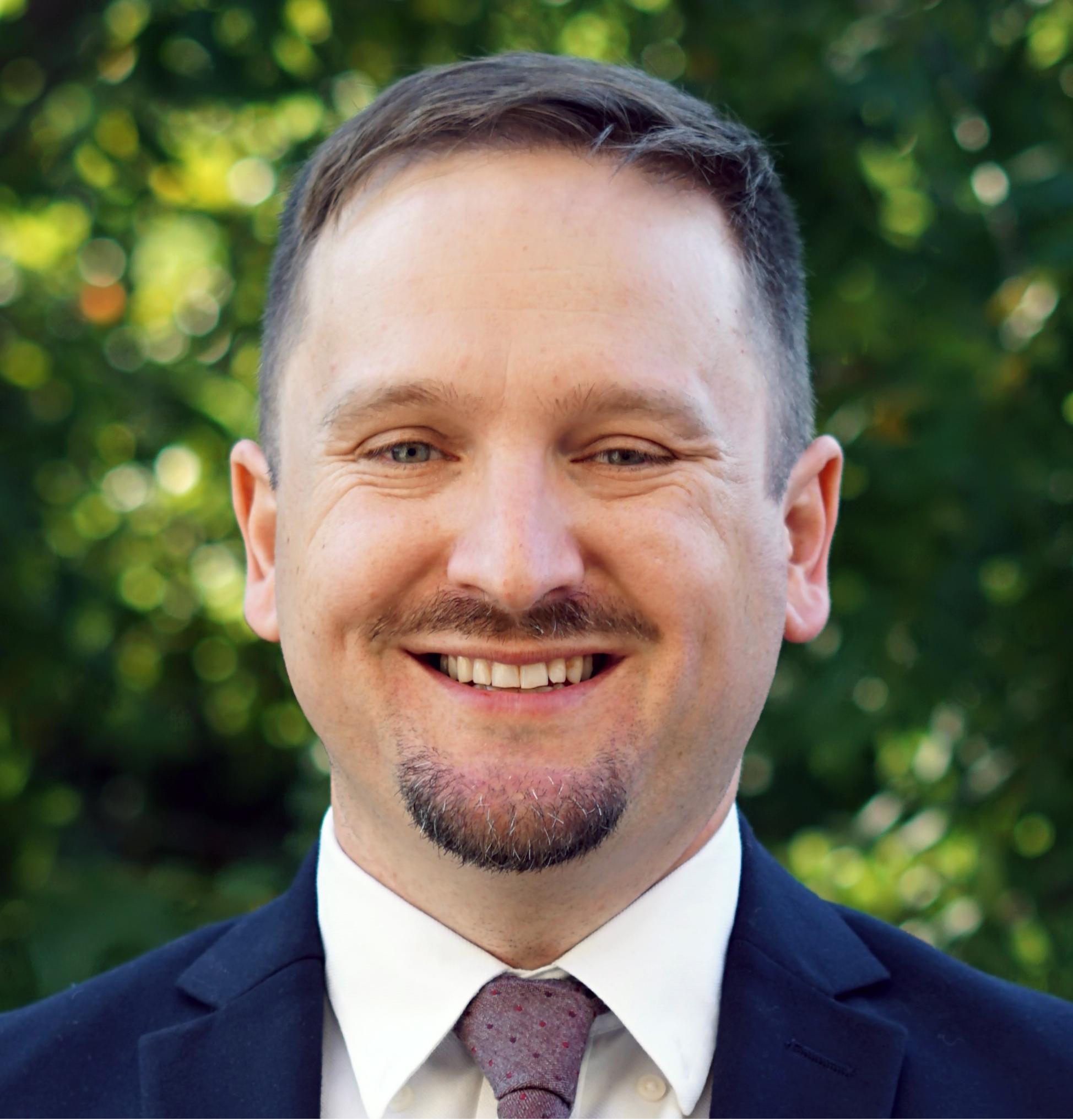
GALLANT Jordan
Associate Professor
- Affiliation
- Center for Language Research
- Title
- Associate Professor
- jgallant@u-aizu.ac.jp
Education
- Courses - Undergraduate
- App-Based Language Learning
Words in the Mind
- Courses - Graduate
Research
- Specialization
-
Linguistics
Educational psychology
Learning support system
Psycholinguistics
Computer Assisted Language Learning (CALL)
Second Language Acquisition
Lexical Processing
Morphology / Morphological Processing
- Educational Background, Biography
-
I grew up in Dubai in a multicultural and multilingual community. Despite this environment, I always found language learning challenging, an experience that sparked my long-term interest in understanding how people learn languages and how that process can be made easier.
After teaching English throughout my twenties, I pursued graduate studies, where I became interested in experimental psycholinguistics. I completed master's degrees in Second Language Acquisition before earning a PhD in Cognitive Science of Language. My research spans a range of areas, including psycholinguistic methodology, morphological word processing, computer-assisted language learning (CALL), and word predictability.
Although these topics are diverse, they are united by a common goal: understanding the cognitive mechanisms that make language possible and applying those insights to improve language learning. Ultimately, I hope my research contributes to more effective teaching methods and technologies that help learners overcome the challenges of acquiring a new language.
- Current Research Theme
- My current research explores how adaptive learning systems can help students learn morphologically complex words.
- Key Topic
- Computer Assisted Language Learning/Morphological Word Processing
- Affiliated Academic Society
Others
- Hobbies
- Fitness, Painting, Reading, Studying Japanese
- School days' Dream
- I wanted to be a professional skateboarder
- Current Dream
- My goal is to make a lasting contribution to language learning research and to inspire future researchers, just as my supervisors and mentors have inspired me.
- Motto
- Life is long. Everyone changes. Everything changes.
- Favorite Books
- Anything by Haruki Murakami, Kazuo Ishiguro, Frank Herbert, James S. A. Corey, George R. R. Martin, Joe Abercrombie, Herman Hesse, or Alan de Botton
- Messages for Students
- Take care of yourself. When university becomes challenging, remember that many problems become much easier to deal with after a good night's sleep, some exercise, and plenty of water.
Dissertation and Published Works
Gallant, J., Chen, Y., & Li, S. (2025). Understanding the Processing of Chinese Compounds: Insights from Pinyin Typing. In Winskel, H., & Pae, H. (Eds.), Handbook of nonlinear writing systems. Springer.
de Almeida, R. G., Gallant J., Antal, C., & Libben, G. (2024). Semantic access to ambiguous word roots cannot be stopped by affixation ¬not even in sentence contexts: Evidence from eye tracking and the maze task. Journal of Experimental Psychology: Learning, Memory, and Cognition, 51(3), 435–459. https://doi.org/10.1037/xlm0001378
Libben, G., Yousefzadeh, B., Gallant, J., & Segalowitz, S. (2024). Using millisecond timing of typewritten production to understand lexical processing in non-Latin scripts: Evidence from Persian. In K. Sadeghi (Ed.) Routledge Handbook of Technological Advances and Considerations in Researching Language Learning. Routledge, London.
Gallant, J., (2023). Typed transcription as an implicit measure of foreign-accent comprehensibility: an online replication study. Research Methods in Applied Linguistics, 2(2).
Sluchinski, K., & Gallant, J. (2023). Non-gendered pronoun processing: An investigation of the gender non-specific third person singular pronoun ‘TA’ in Chinese. Discourse Processes. https://doi.org/10.1080/0163853X.2023.2255075
Gallant, J. & Libben, G. (2021) Power and Positivity: Psycholinguistic Perspectives on Word Valence in Canadian Parliament. Frontiers in Communication. 6:770497.
Libben, G., Gallant, J., & Dressler, W. (2021). Textual Effects in Compound Processing. Frontiers in Communication, 6:646454.
Gallant, J., & Libben, G. (2020). Can the maze task be more amazing? Adapting the maze task to advance psycholinguistic experimentation. The Mental Lexicon, 15(2), 366-383.
Gallant, J., & Libben, G. (2019). No lab, no problem. Designing lexical comprehension and production experiments using PsychoPy3. The Mental Lexicon, 14(1), 152-168.