Biography
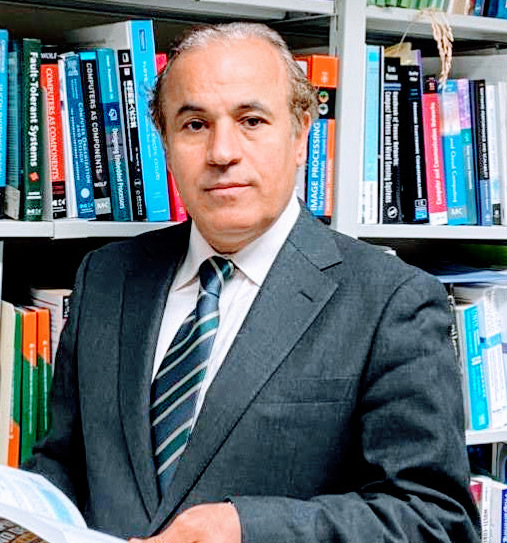 Abderazek Ben Abdallah earned his Ph.D. in Computer Engineering from the National University of Electro‑Communications (UEC) in Tokyo in 2002. He currently serves as Regent, Dean, and Full Professor in the School of Computer Science and Engineering at the University of Aizu. A university leader since 2014, he has served on the Education and Research Council and previously led the Computer Engineering Division (2014–2022).
With over two decades of academic leadership, Dr. Ben Abdallah’s research covers a broad spectrum of the computing landscape, including Integrated Computing Systems, Embedded Systems, Computer Architecture, AI & Neuromorphic Computing, On-Chip Interconnects and 3D-ICs, and Reliability and Fault-Tolerance. He is the author of four books, including Neuromorphic Computing: Principles and Organization—recognized by BookAuthority in 2025 as the best neuromorphic computing book of all time—and Multicore Systems on Chip: Practical Software/Hardware Design, which has been translated into Chinese. His scholarly record includes more than 160 peer-reviewed publications, 17 competitive research grants, and 17 patents.
A dedicated educator, Dr. Ben Abdallah has taught a broad range of courses, including Computer Architecture and Logic Circuit Design. He has supervised four postdoctoral fellows, eleven Ph.D. candidates, twenty-four master’s students, and more than forty bachelor’s theses. He has also served as an external Ph.D. examiner for institutions such as the University of Otago (New Zealand), Murdoch University (Australia), and the University of Aizu. In total, he has mentored more than seventy-five graduate students and researchers worldwide.
Dr. Ben Abdallah is the Associate Editor-in-Chief of IEEE Computer (2026–present). He serves as an Associate Editor for IEEE Network Magazine and Frontiers in Neuroscience, and previously served on the editorial boards of IEEE Transactions on Emerging Topics in Computing (2014) and the Journal of Embedded Systems (2015–2020). He is the founding and standing chair of the IEEE MCSoC Forum (2004–present). His global service includes contributions to the IEEE P3722 Standard on Responsible AI in Higher Education and membership on the IEEE CASS Technical Committee on CASEO. He also served on the Tunisian Prime Minister’s High-Level Committee for Science and Technology (2009–2011).
An IEEE Circuits and Systems Society (CASS) Distinguished Lecturer (2026–2027), Dr. Ben Abdallah has delivered over 23 keynote addresses worldwide. He has held visiting professorships at the Hong Kong University of Science and Technology (2024), Huazhong University of Science and Technology, and the African University of Science and Technology. His honors include the President Award for Scientific Research and Technology (Tunis), multiple Best Paper Awards, and election as a Full Member of Sigma Xi (Class of 2025). He is a Senior Member of IEEE and ACM.
Click here for the University of Aizu Faculty Profile »